Why Waiting and Pressing Don't Cure After-Dribble (And What Actually Does)
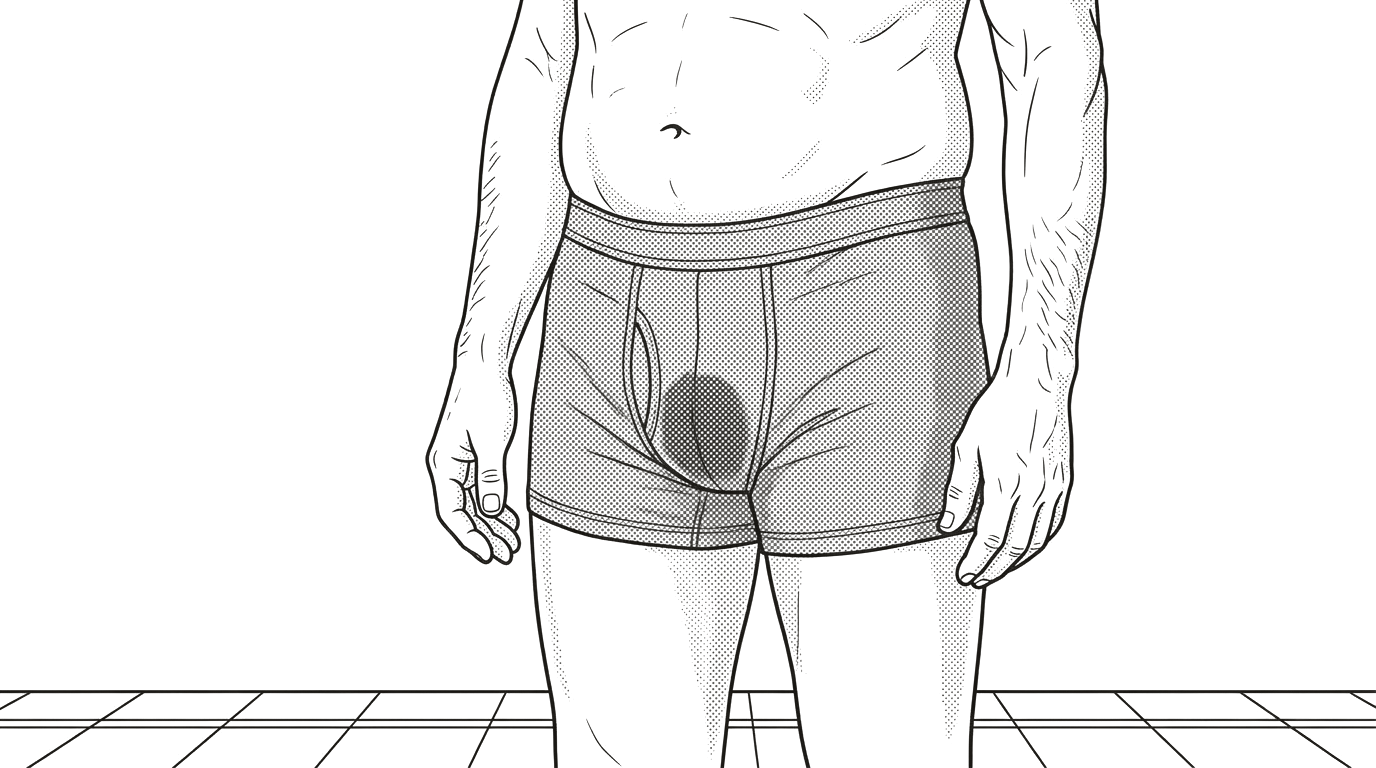
If you regularly experience a few drops of urine leaking into your underwear after you’ve left the toilet, you already know how frustrating it is. You’re also likely doing something to manage it.
Most men with post-micturition dribble develop a routine. You might wait an extra ten seconds at the urinal to let gravity do its work. You might press behind your scrotum to push the remaining fluid out. You might even walk around and make a second trip to the bathroom before leaving the house.
These physical workarounds are logical, and they do help keep your pants dry in the short term. They are also all anyone ever offered you. But as you’ve probably noticed, they don’t actually fix the problem. The leak comes back every single time.
Here is why your current routine can’t fix the cause, and what the trials show does.
Why workarounds are only a band-aid
To understand why waiting and pressing fail as long-term solutions, you have to understand why the urine is trapped in the first place.
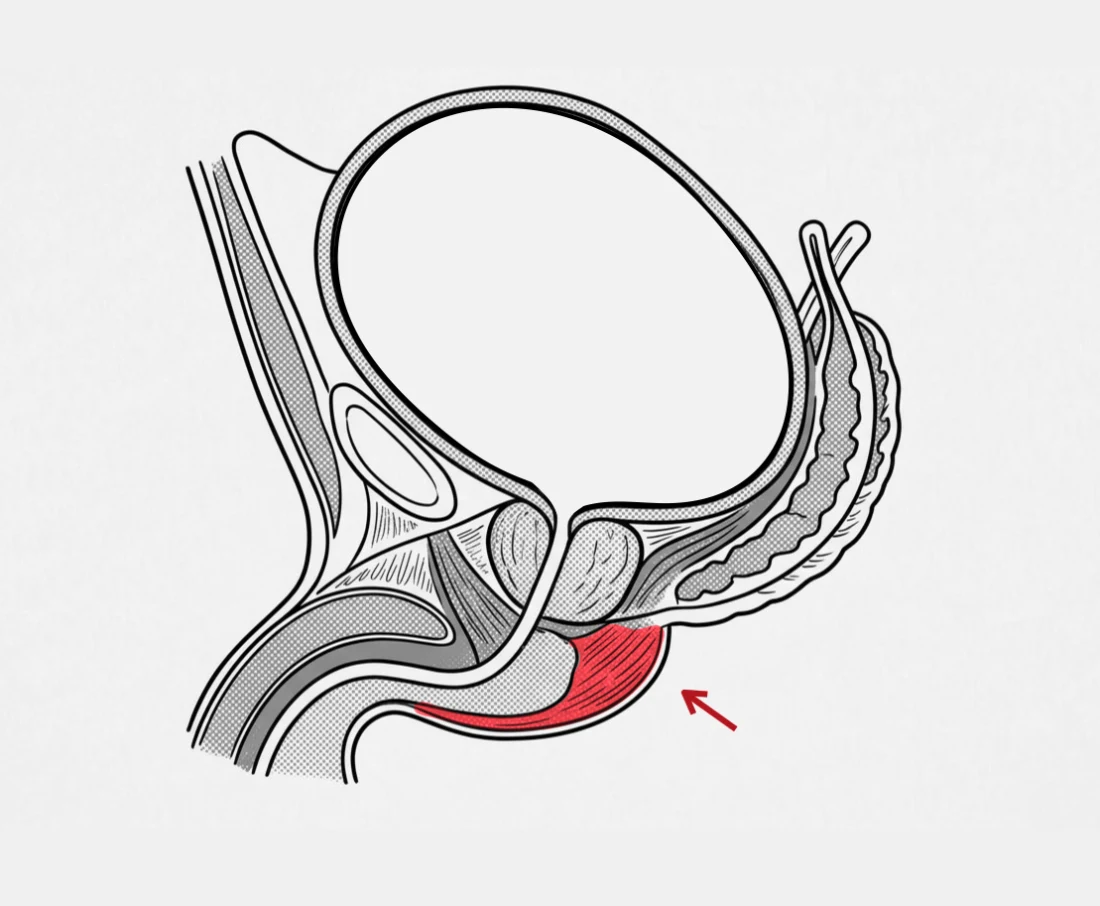
Urine pools in a natural curve in the male urethra. Normally, a specific pelvic floor muscle called the bulbocavernosus contracts automatically at the end of urination to squeeze this pooled fluid out.[1] When this muscle weakens with age, it loses the strength to clear the tube. Nobody teaches men this muscle is there, so almost nobody trains it. That is not something you did.
When you wait longer for gravity to work, or use your fingers to manually press the fluid out, you are doing the muscle’s job for it. That is sensible, but it cannot make the muscle stronger, so the cause stays. This has been tested directly: a 1997 randomised trial gave 49 men either urethral milking, counselling, or pelvic-floor exercises for twelve weeks, and the exercises reduced the dribble the most.[2]
The clinical solution: Targeted training
What works on the cause is training the bulbocavernosus muscle.
The clinical evidence for this is strong. In a randomised controlled trial, men with this exact condition were given a structured pelvic-floor exercise program. After six months, three supervised and three at home, 75% of the men in the training group were entirely symptom-free.[3] They didn’t just see an improvement—the leaking stopped entirely.
This approach is backed by top medical authorities. As Dr. John Stoffel, a urologist at Michigan Medicine, puts it, after three to four months of consistent exercises, the dribble is “no longer an issue.”[4] The Mayo Clinic and Harvard Health say the same: pelvic-floor training is what they point men who dribble after urination toward.
Knowing the muscle needs training is the easy part. The plan behind the training decides the result, and building that plan should not be your job.
Why generic “Kegels” often fail
Most men are told to “do Kegels” and given nothing else: no plan, no dose, no check. Generic Kegels like that frequently fail, for two main reasons.
1. The Wrong Squeeze A Kegel as most men learn it is a hold: the squeeze you would use to stop the stream. After-dribble is a different job, the squeeze-out at the end, and it is a different contraction of the same muscle. Men who train the hold get stronger at holding and keep dribbling. Many also squeeze the wrong muscle, the buttocks or the abdomen, because nobody showed them the difference.
2. Lack of Progressive Overload Like any muscle in the body, the pelvic floor requires progressive overload to grow stronger. Doing the exact same ten squeezes every day will quickly lead to a plateau. A clinical program adjusts the volume, duration, and intensity of the exercises week by week to ensure the muscle continually adapts and strengthens.
What a program should do for you
The right squeeze, taught properly, and a check that this is the kind of dribble training ends. A plan that raises the dose week by week. A number that shows it working. None of that should be yours to organise, so the program has to do it for you.
That is exactly what Sahara was built to do.
Sahara starts with a two-minute assessment: how long you have had it, how much, when the drops come, what you have already tried. From your answers it builds a custom 12-week protocol, opening with a technique correction for whatever you tried before, and a daily one-tap rating so you can see it move.
Then the app runs it: it reminds you when, counts every hold, raises the dose by itself and moves a missed session to the next day. You give it 5 minutes a day, with no equipment, entirely under the radar.
You have managed this on your own for long enough. Let the app do the managing.
References
- Yang DY, Lee WK. A current perspective on post-micturition dribble in males. Investigative and Clinical Urology 2019;60(3):142–147. Full text
- Paterson J, Pinnock CB, Marshall VR. Pelvic floor exercises as a treatment for post-micturition dribble. British Journal of Urology 1997;79(6):892–897. PubMed 9202555
- Dorey G, Speakman M, Feneley R, Swinkels A, Dunn C, Ewings P. Randomised controlled trial of pelvic-floor exercises for post-micturition dribble. Urologic Nursing 2004;24(6):490–497. PubMed 15658735
- Michigan Medicine, Health Lab. Is dribbling after peeing normal? John Stoffel, M.D. michiganmedicine.org
- Mayo Clinic. Kegel exercises for men: understand the benefits. mayoclinic.org
- Harvard Health Publishing. Pelvic floor exercises: help for incontinence, sexual health, and more. health.harvard.edu
Every paper, with what it shows and what the site simplifies, is on the science page.
This article is general information, not medical advice. Pain or burning, blood in the urine, fever, or a sudden change in the last few weeks need a clinician before any training.
Related articles
Educational content, not medical advice. See a clinician for pain, blood in urine, or sudden changes. Results vary; the cited trial reflects its study population. Sources for every figure are available on request.