Why 300 Million Men Have a Problem They Haven’t Told Anyone About
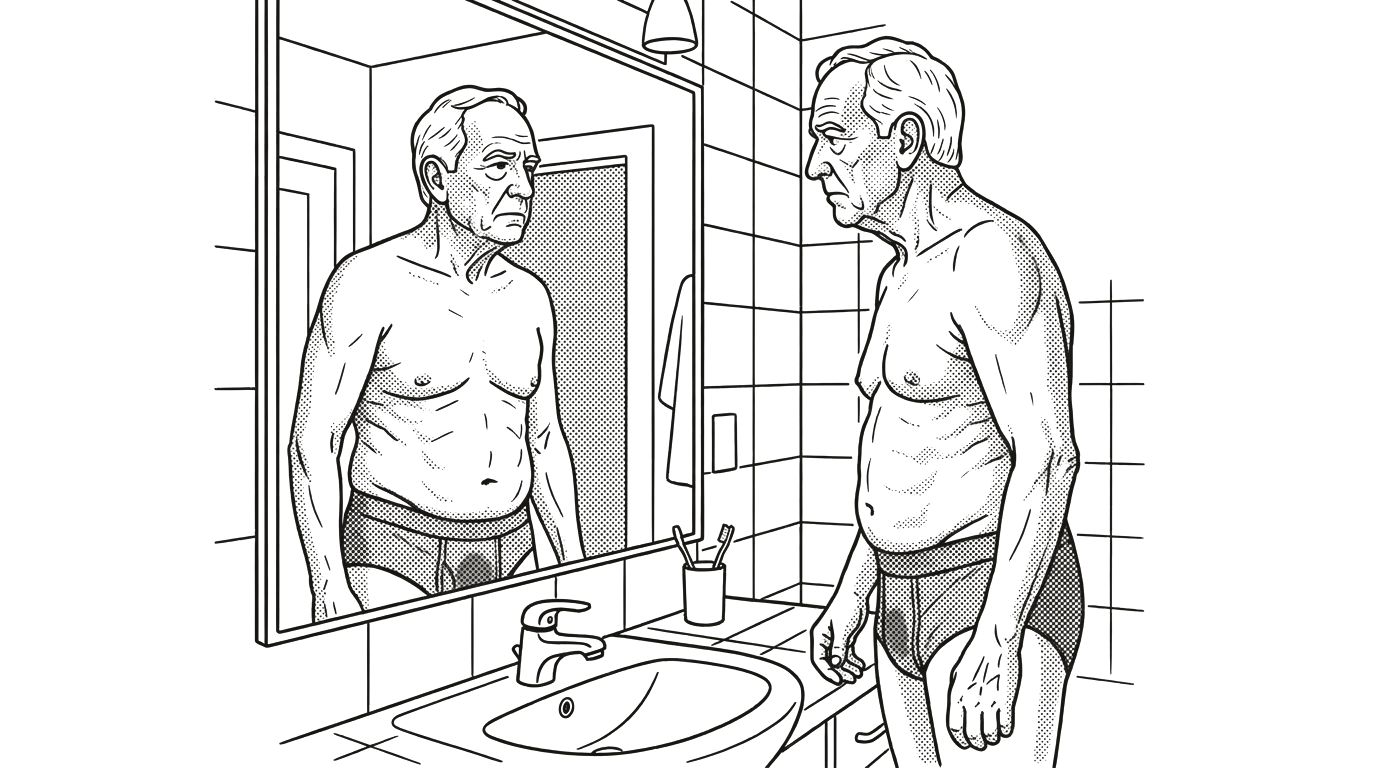
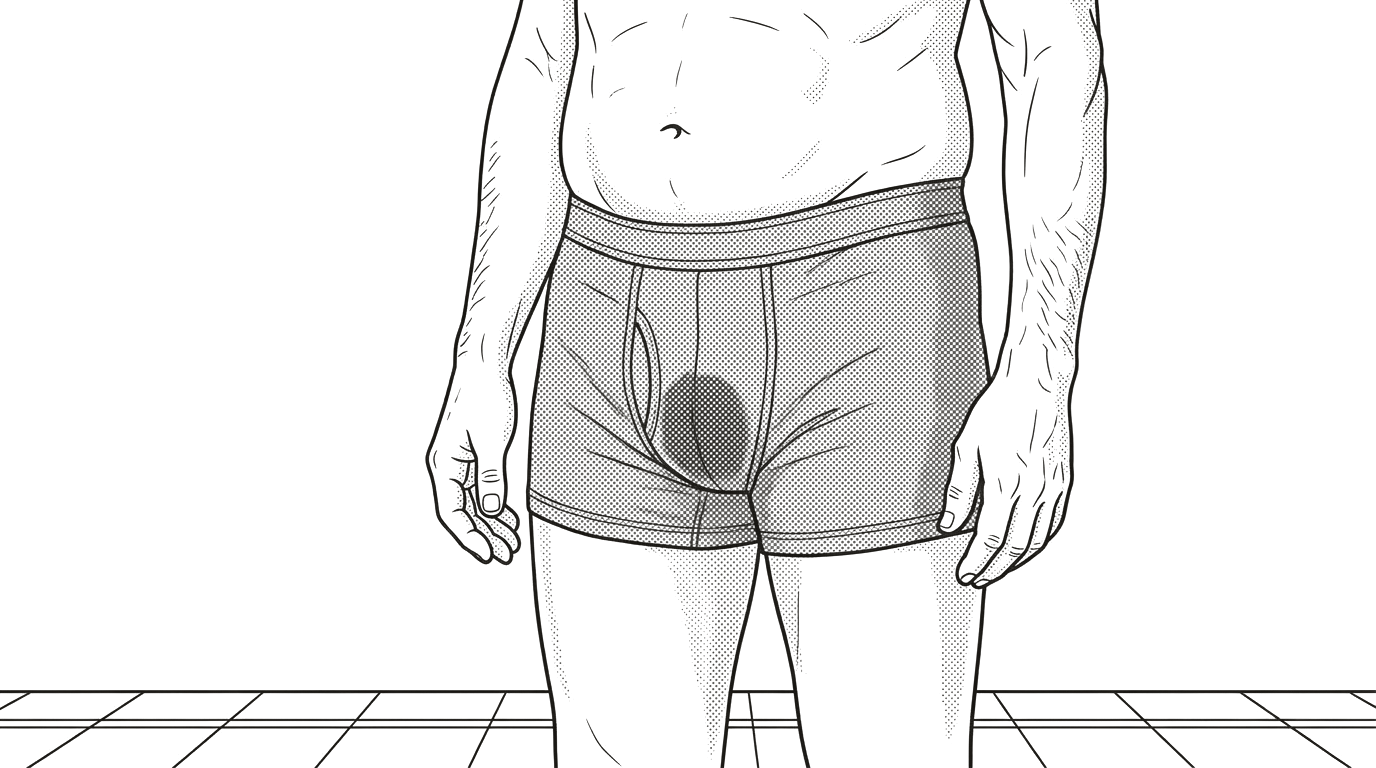
When you experience a small leak of urine shortly after finishing at the toilet, the immediate reaction is usually frustration. But when it happens consistently, that frustration often turns into something heavier: embarrassment.
In a recent survey of approximately 300 men dealing with post-micturition dribble, we asked how the condition made them feel. The overwhelming consensus was embarrassment. Men described feeling self-conscious about their clothing, anxious about using public restrooms, and worried about what the leak meant for their health.
But the most striking data point wasn’t how they felt—it was how they reacted to those feelings. Out of the men we surveyed, six in ten had never told a single person about the issue.[1] Not their partners, and not even their doctors.
The cost of staying silent
When a medical issue is wrapped in embarrassment, it thrives in isolation.
Because men don’t talk about after-dribble, they assume they are the only ones dealing with it. They assume it’s a unique personal failing, a scary prostate issue, or just an unavoidable consequence of getting older. It is none of those.
This silence carries a massive penalty: it prevents men from discovering that the problem is highly treatable.
If it never comes up with a clinician, you never learn that post-micturition dribble is rarely caused by a failing bladder or a swollen prostate. Instead, you miss out on the actual medical consensus: the leak is typically caused by a single, specific muscle that has simply stopped doing its job.
It’s a mechanical issue, not a life sentence
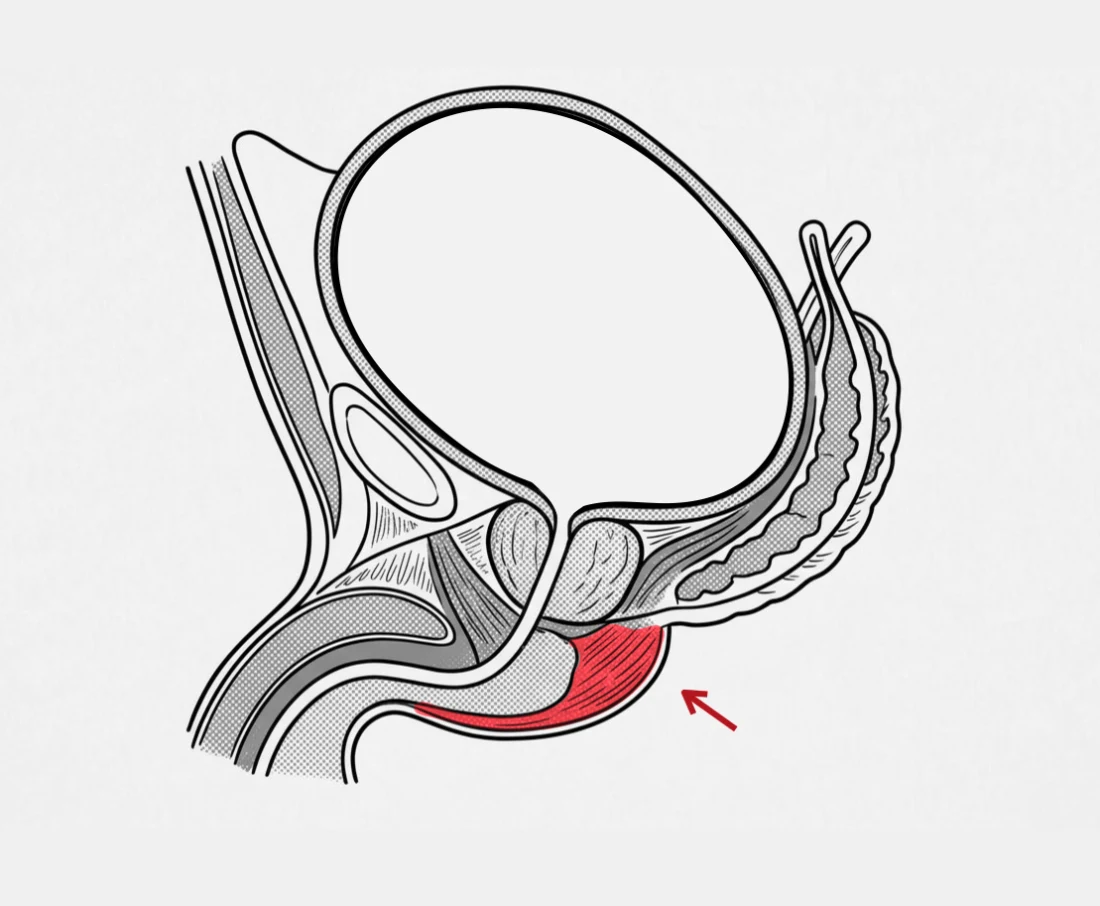
The male urethra has a slight bend where a small amount of urine naturally pools. A muscle at the base of your pelvis, the bulbocavernosus, is supposed to contract automatically to squeeze that remaining fluid out.[2]
When you spend years sitting at a desk or simply getting older, that muscle can atrophy. When it gets weak, it can’t squeeze hard enough to clear the tube. You zip up, walk away, and gravity pulls the remaining drops into your underwear.
That’s the entire mechanism. It’s not a mystery, and it’s certainly nothing to be embarrassed about. It is a straightforward mechanical failure of a muscle that nobody teaches men to train. It is not something you did.
Muscles can be trained
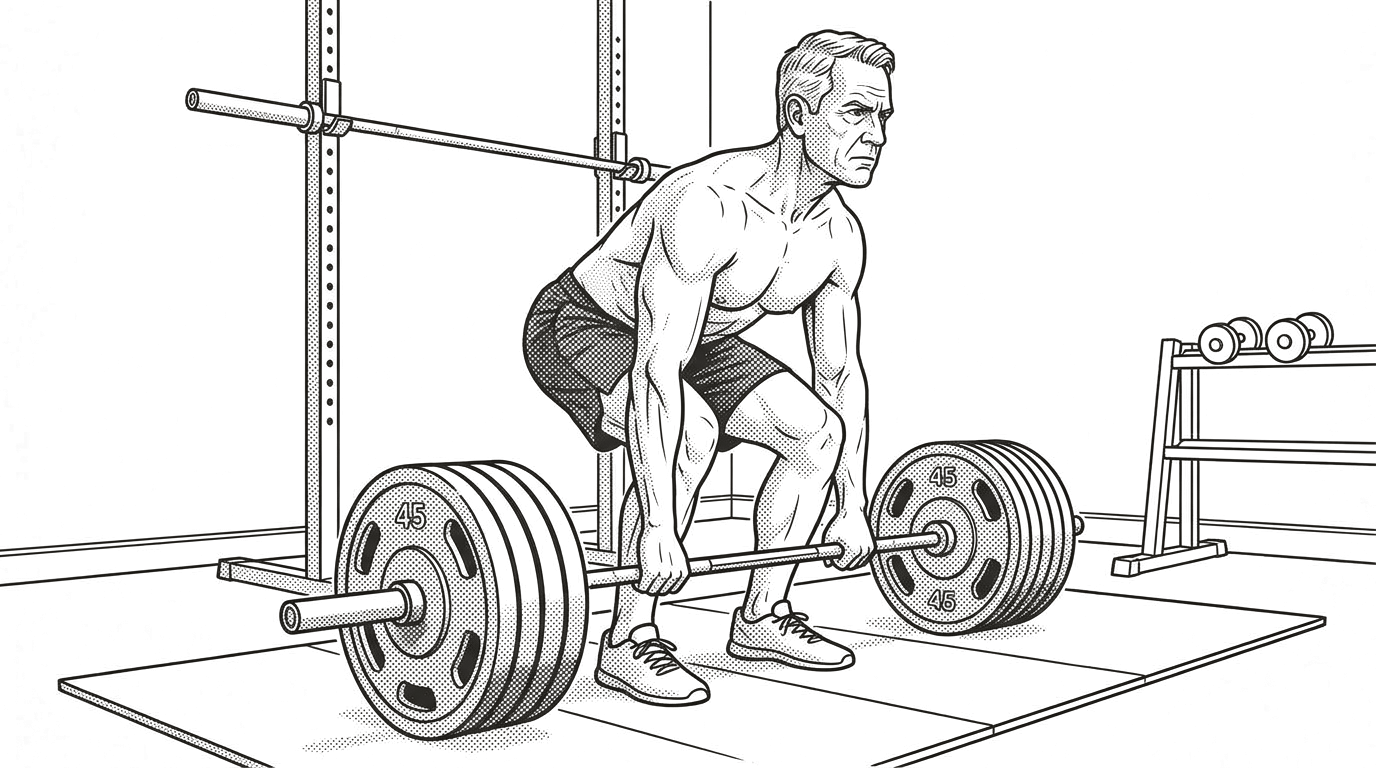
Because the root cause is muscle weakness, the clinical solution is physical conditioning.
Clinical trials have shown that structured pelvic floor training can completely eliminate post-micturition dribble. In a randomised controlled trial, 75% of men became completely symptom-free after six months of training, three supervised and three at home.[3] Harvard Health, the Mayo Clinic and the NHS all describe pelvic-floor training as the thing to do about dribbling after urination.
The exercises require no equipment, take 5 minutes a day, and are completely invisible to anyone around you. You don’t have to talk to anyone about it, and you don’t have to go to a clinic. You also don’t have to work out which exercises to do or in what order.
Sahara’s two-minute assessment asks about your specific symptoms and builds a customized 12-week protocol directly on your phone. After that, the app plans every session, reminds you when, counts every hold and makes it harder each week by itself. It’s completely private, discreet, and based on clinical evidence.
Nobody told you this could be trained. Now you know, and the app handles the rest.
References
- Sahara assessment answers, about 300 men, September 2026. Self-selected, not a prevalence figure.
- Yang DY, Lee WK. A current perspective on post-micturition dribble in males. Investigative and Clinical Urology 2019;60(3):142–147. Full text
- Dorey G, Speakman M, Feneley R, Swinkels A, Dunn C, Ewings P. Randomised controlled trial of pelvic-floor exercises for post-micturition dribble. Urologic Nursing 2004;24(6):490–497. PubMed 15658735
- Harvard Health Publishing. Pelvic floor exercises: help for incontinence, sexual health, and more. health.harvard.edu
- Mayo Clinic. Kegel exercises for men: understand the benefits. mayoclinic.org
- NHS. Urinary incontinence: treatment. nhs.uk
Every paper, with what it shows and what the site simplifies, is on the science page.
This article is general information, not medical advice. Pain or burning, blood in the urine, fever, or a sudden change in the last few weeks need a clinician before any training.
Related articles
Educational content, not medical advice. See a clinician for pain, blood in urine, or sudden changes. Results vary; the cited trial reflects its study population. Sources for every figure are available on request.